Latest news
Interview with Sophie Hinners
19 November 2026
German international show jumper Sophie Hinners has established herself among the leading names in the sport, but her journey to the top has been shaped by the people, horses and opportunities she encountered along the way. Having joined Stal Hendrix in 2018, Sophie reflects on the formative years she spent working alongside Emile Hendrix, the special partnership with Vittorio 8 that helped launch her international career, and the lessons that continue to influence her approach to producing horses today.
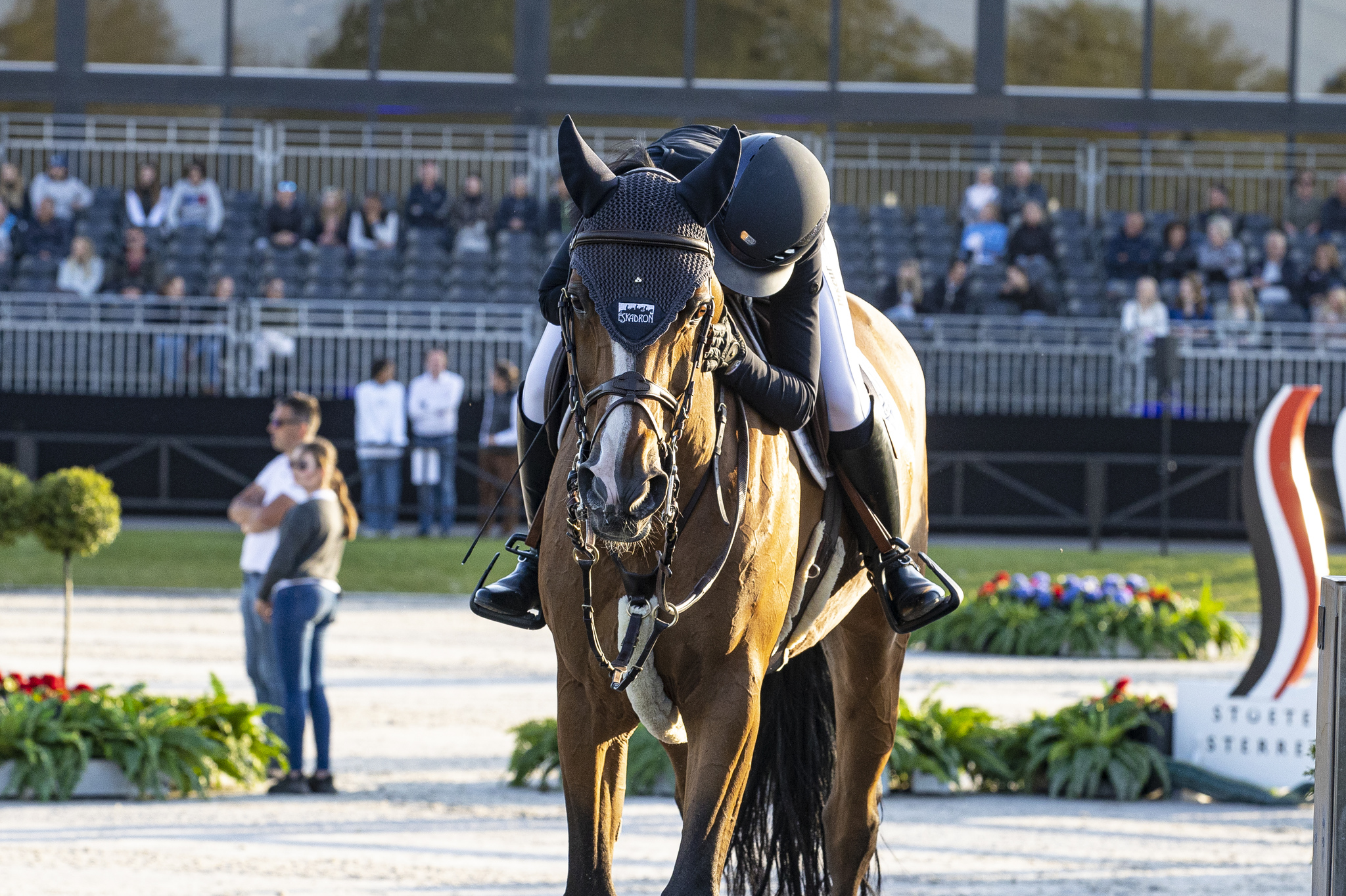
- How did your interest in horses develop into an ambition to become a professional rider, and what were the most important influences in those early years?
I started riding when I was three-years-old. My uncle and aunt always did it professionally. They had a yard with a lot of horses, mostly young horses, horses for sale, horses from owners, a bit of everything. My cousin, who was about five years older, was also always riding, so I spent a lot of time with him, going to shows and helping each other. He would help me, and when I was old enough, I could also help him. We kind of did everything together, and he taught me a lot.
As a young kid, I always dreamt of being a professional rider, looking up to idols like Meredith Michaels-Beerbaum, Ludger Beerbaum and Marcus Ehning. I remember dreaming of being like them one day, or that I would be riding at big shows and people could watch me on TV. I think these were really childhood dreams. I would say it was quite early that I realised I wanted to do it professionally. At quite a young age, probably when I was around 12, I started to ride a lot of different horses in the young horse classes. So, from the beginning, I really got used to different types of horses, and I think those years taught me a lot.
I didn’t have the experience of getting a schoolmaster who already knew everything and could teach me a lot. It was more that I had to really work our way up. We rode and competed the horses already in the stable, but we couldn’t buy one to take us to a higher level.
I think those years were really important. Probably at that time, I always thought, “Oh, how lucky are the other girls my age? They have really good horses to do juniors and young riders, and they can do European Championships.” I was also lucky – I had a good horse to do a lot of national shows, but I was still looking at other people who had better horses and compete at better shows. Now, when I look back, those were really important years when I learned to get the feeling for different horses and how to adapt to different kinds of horses. I think this is what made me the rider I am today.
Many lessons and influences followed, but those early years of riding different young horses and bringing out the best in each one were crucial in making me a stronger rider.
- You joined Stal Hendrix in 2018. What attracted you to the opportunity, and what do you remember most clearly about arriving in Baarlo?
There’s a lovely story behind how I joined Stal Hendrix. During my apprenticeship after school, Emile and a client tried a horse I was riding at a show for my boss at the time. I thought the trial went well, but the client wasn’t so keen. Then Emile said, “We’re not going to buy the horse today, but if you ever want to have a job, call me. I would like to have you as a rider.” I was like, “Okay.” I mean, I just said okay, because what do you would say in that moment. After that, I took it for granted that I could join Stal Hendrix when my apprenticeship ended, since Emile had offered me a job. I think I still had about a year to go. I saw him once or twice at shows in Peelbergen, and each time he said, “Remember, call me when you want a job.”
I would say three or four months before the end of my apprenticeship, my trainer at the time said, “Maybe if you really want to do it, you should call him. It’s not that you can start there from one day to the next. It also has to fit. They need to be looking for a rider. Maybe they are full. I think you should call him.” So the same day I called him, and I was very lucky because at that time they were looking for a new rider. A couple of weeks later, I went there for a trial, and then a couple of weeks later, I started. I still had to do my tests to finish the apprenticeship, but then I went to Stal Hendrix and started.
That was my first real big job. I always had it in my head because he had offered it to me, and in the end, everything worked out timing-wise. I had the feeling it was supposed to be like this. I really still remember my trial – I went to Stal Hendrix and rode a few horses, and after that I had a talk with him. Then I went to see him at a show that day and spent a bit of time there. I remember my first day working in Baarlo. I started on a Sunday to get to know the horses a little bit because on Monday, or maybe Tuesday, we started the auction videos. I remember I only had one or two days to get to know the horses, and then we directly did the videos. So, it was actually a really busy and fun start. Those were my very first impressions when I started in Baarlo.
- Working with Emile and the team, which aspects of your riding developed the most? Is there a particular lesson from that period that remains part of your daily work?
I learned so much during my time at Stal Hendrix, particularly from Emile. I already had ability and experience riding a variety of horses, including young horses, mainly at national level, but my time there really shaped me as a rider. Everything was much more professional, and the standard of work was on a completely different level. I developed my riding and learned so much about horse care and grooming.
During my time at Stal Hendrix, I learned that there are many ways to achieve the same goal, and I became much more professional in my approach. So much of what I learned there still influences my daily work with my horses. Above all, it taught me the importance of patience and allowing each horse to develop step by step. You cannot move on to step five before you have established steps one and two.
- You rode a wide variety of horses at Stal Hendrix. What did that experience teach you about recognising a horse’s strengths and adapting your approach to suit the individual?
I think riding a wide variety of horses really helps you develop as a rider. From a young age, I rode young horses and horses of different types, but at Stal Hendrix that experience became even broader. There were plenty of young horses, as well as some older ones, and you would often have new horses to ride every couple of weeks. I was very fortunate to have that opportunity. Every horse is different, and working with so many helps you develop your instincts and understand more quickly what each one needs.
That experience really helps when you ride a horse that reminds you of one you have worked with before. You remember which approach worked well, or when you might need to try something different. You have to develop a feel for each horse and recognise that there are many ways to reach the same goal. There is no textbook that tells you exactly how to ride every horse. It is a continuous process of learning, gaining experience and developing your instincts, which allows you to adapt more quickly. I think that ability to understand and adjust to different horses in a short space of time is an important part of becoming a good rider.
- Vittorio 8 – who you developed a partnership with at Stal Hendrix – played an important role in your progress. What made him such a valuable partner at that stage, and which achievement together means the most to you?
Vittorio is a once-in-a-lifetime horse for me, and he has played such an important part in getting me to where I am today. He came to Stal Hendrix during my first week there, and I was fortunate enough to be given the opportunity to ride him. From the beginning, I had a really good feeling with him. I knew he had a strong character, which he had already shown before I started riding him. He has a mind of his own and likes to do things his way.
It probably took us some shows to really get to know each other, but he really helped me to show early on that I could also do compete in the bigger classes. He gave me the chance to show Emile and the team at Stal Hendrix that I was able to not only ride young horses but could also ride bigger classes. He really opened doors for me, allowing me to progress quite quickly to competing at CSI2* level and, occasionally, at CSI3* shows.
When I look back, after I left Stal Hendrix, I also had the opportunity to take Vittorio with me. He was the horse with whom I competed in my first CSI2*, CSI3*, CSI4* and CSI5* Grands Prix, as well as my first Nations Cup. Our first CSI5* Grand Prix together was at Aachen, which made it particularly special. Without him, I would not be the rider I am today. He helped me progress through the levels and has played such an important role in my career.
I would say it was supposed to be like that. I was really lucky that he came the week I started there. He also could have come three weeks earlier, and then I would never have been his rider. So, for me, he is a once-in-a-lifetime horse. Richie’s cousin is riding him now, and watching them together reminds me of the beginning of my own partnership with him. I feel he has found another young rider to share his experience with and teach so much. He is competing at a lower level now, but I can really see the similarities between how we started together and the partnership they are building. So yes, this horse is really important to me, and he really helped me in my career.
- How did joining Richard Vogel and David Will [VW Equestrian] build on the experience you had gained in the Netherlands, and how has working together shaped your approach to the sport?
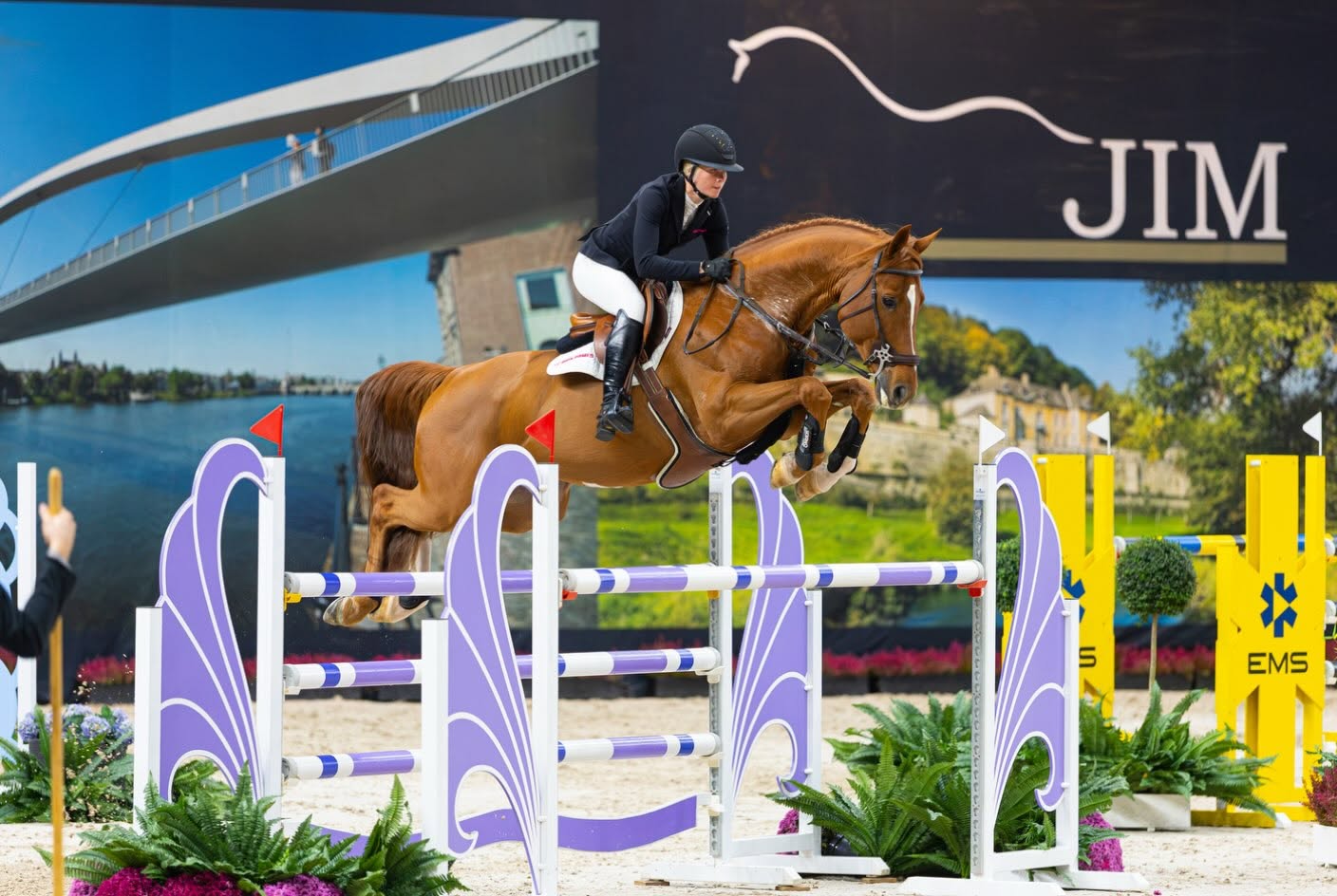 I learned so much at Stal Hendrix, and my time there really shaped me as a professional. I left as a much better rider than when I arrived, which gave me a strong foundation for the next step with Richie and David. Their business was still very young. I think they had only been running it for around two years when I joined, so it was largely about starting with new horses and developing them. I was very fortunate to take Vittorio with me, which allowed me to continue competing at the higher levels, and I also had another very good horse from Emile, Galanda Mara TH. That gave me two more experienced horses for the bigger classes, while I brought the others through.
I took so much of what I had learned at Stal Hendrix into that new chapter, but I also remained in very close contact with Emile and the Hendrix family. Leaving was a difficult decision, but we stayed close and continued working together. That made the transition much easier, and I felt very fortunate to have their continued support.
- Producing young horses remains an important part of your work. What do you look for beyond natural ability, and how do you decide when a horse is ready to take the next step?
I really enjoy producing young horses. If someone asked me to either only ride older horses in the big classes or only young horses, it would be really hard for me to decide because I really enjoy the process of developing young horses. I really love to see the steps.
I have one example horse called Iron Dames Kaleni Jo –and I’ve had her since the end of her five-year-old year or beginning of her six-year-old year. She’s 10-years-old now, and I have been the only one showing her all these years. She jumped her first CSI5* Grand Prix this year and has already produced a clear round at that level, as well as in other 1.60m classes. When you have spent so much time working with a horse, it is incredibly rewarding to see her develop and achieve those results.
I really enjoy the work with young horses, and I think you have to feel when the horse is ready for the next step. With some horses, everything goes a little bit quicker. Some horses are very quick to learn, while others need a little more time, but that does not necessarily reflect their potential as they get older. Sometimes things simply fall into place later, and they surprise you, developing into even better horses than you had expected.
Many times with young horses, you take the next step and then maybe need to take some steps back. I think this is something where you just always have to stay patient. It’s absolutely normal that it goes like this with young horses, and you just have to take your time and do it all over again. The most important thing is to always stay patient and be happy with a lot of small steps.
- How has your relationship with the Hendrix family continued over the years, and what do you value most about that connection?
I’m very happy and lucky that we have a very close relationship, I would say especially between Emile and myself. We spent a lot of time together, working the horses together, he was helping me at the shows, so I have a really close relationship with him. In general, I really feel like they are my second family, I feel so welcome, and I’m always happy when I’m back in the area and around there. I’m just very lucky that the contact didn’t end when I left and that I’m still very close to them and I know I can always call and ask for help. It’s a very lucky situation, and I’m very happy with the way it is.
Having recently enjoyed a successful outing at Jumping Indoor Maastricht, close to Stal Hendrix’s home in Limburg, Sophie is now looking ahead with excitement to the final weeks of the year. With the GC Playoffs in Verona this weekend, followed by CHI Geneva in December, she has plenty to look forward to as she continues to build on the journey that began with those formative years at Stal Hendrix.